Speech for the 126th Infantry Regiment Formal Dining Out
by Lieutenant Colonel David Britten
Good evening,
Thank you for inviting me to speak tonight. For those who may not know, I serve as the appointed historian and archivist for the 126th Regimental Association. I am joined by several life members of the association who have dedicated the past six years volunteering in the archive room at the Grand Valley Armory. Our mission is to preserve the regiment's rich history and traditions, making them accessible to both you and the public.
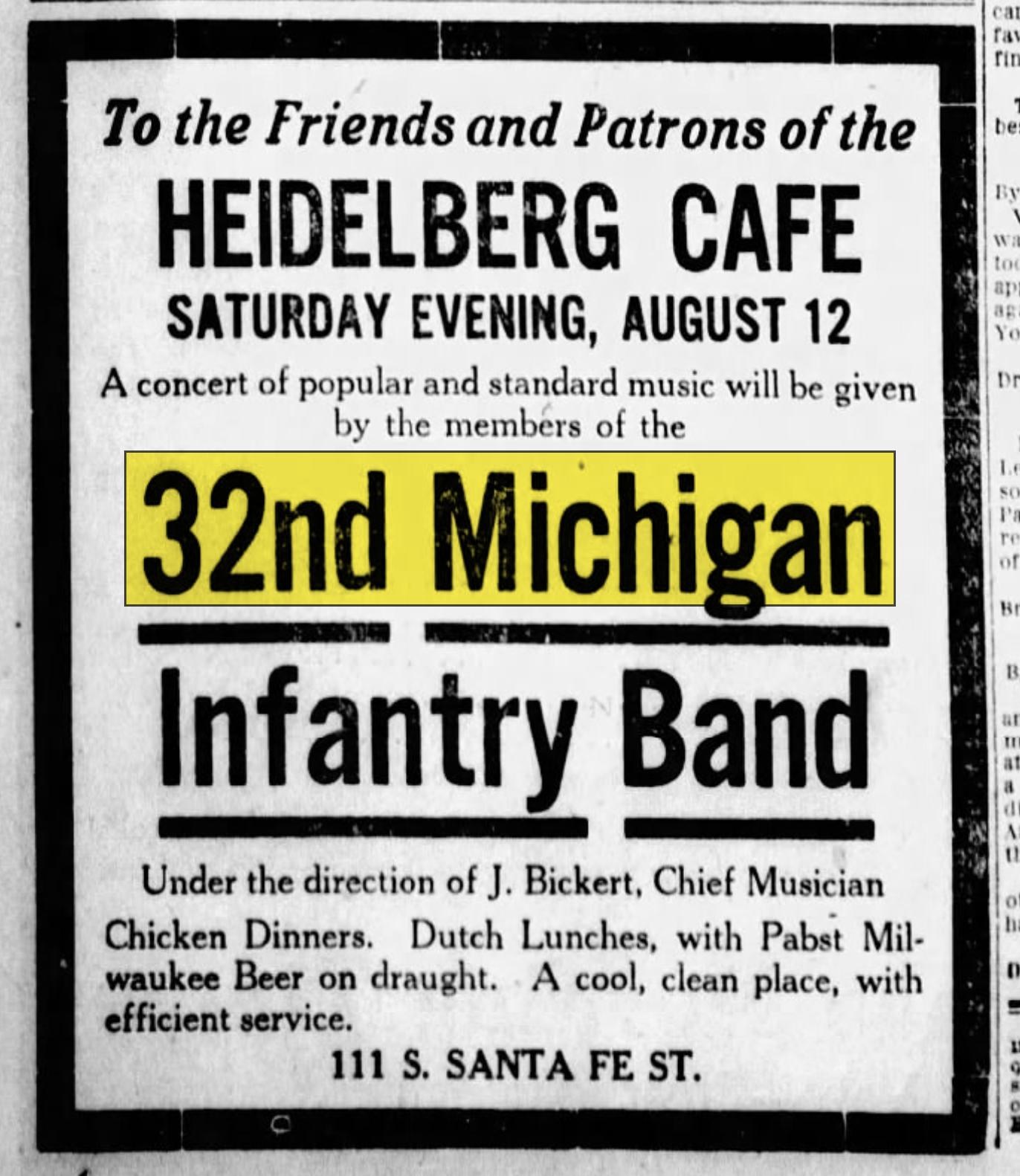
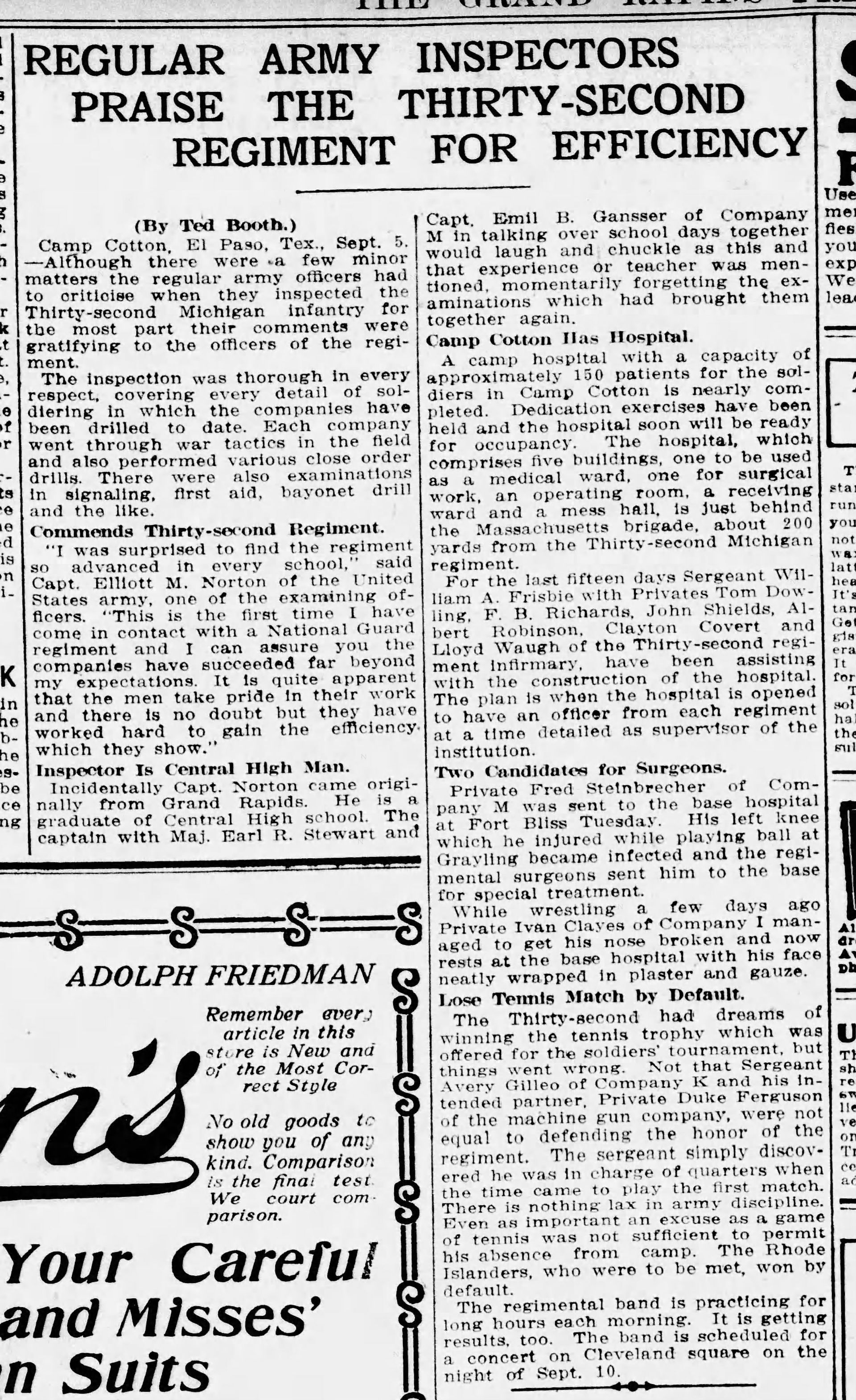
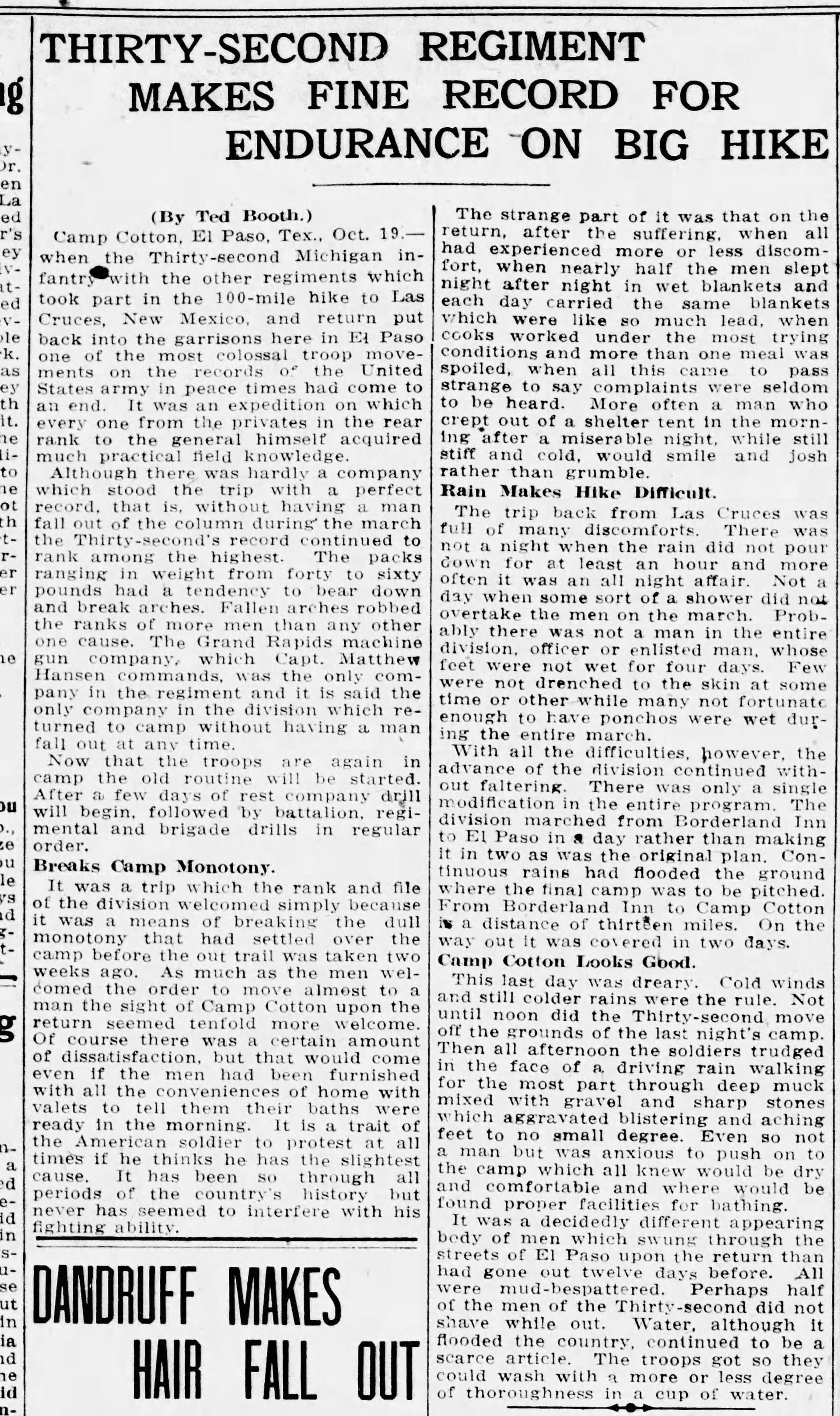
Tonight, I’d like to take a few minutes to share an unusual but extraordinary chapter from our past. On June 19, 1916, the entire Michigan National Guard was called into federal service to patrol the border with Mexico. The units gathered at their armories and assembled at the newly established state mobilization site in Grayling, now known as Camp Grayling. Among them was the 32nd Regiment, headquartered in Grand Rapids, organized into three battalions with companies from cities across Michigan.
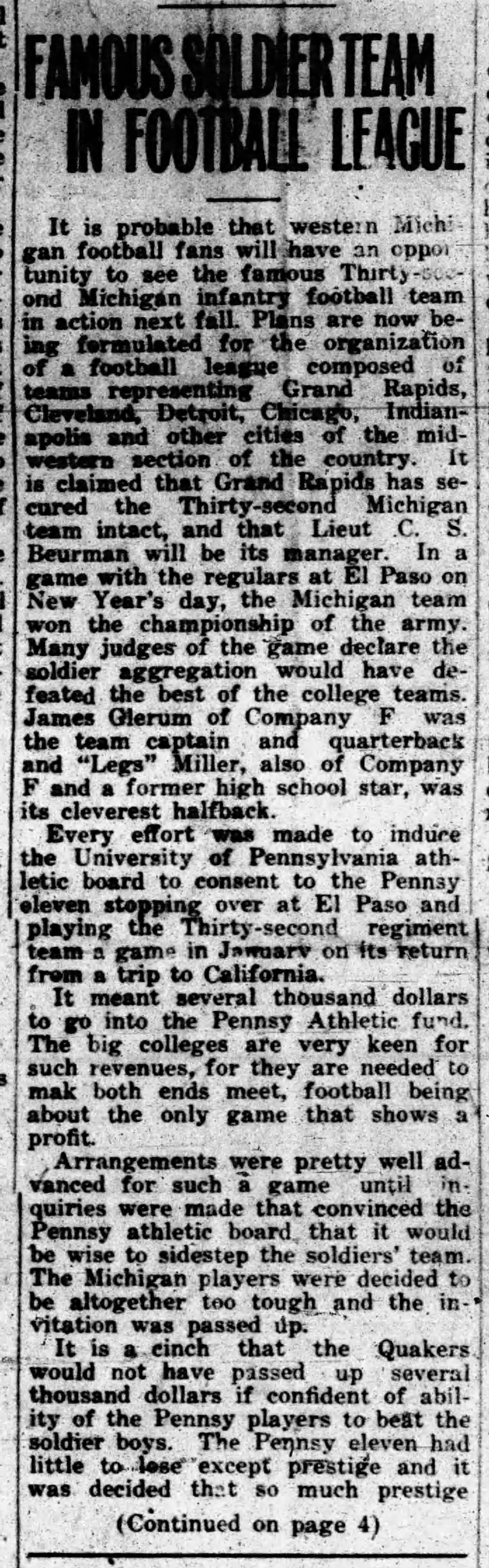
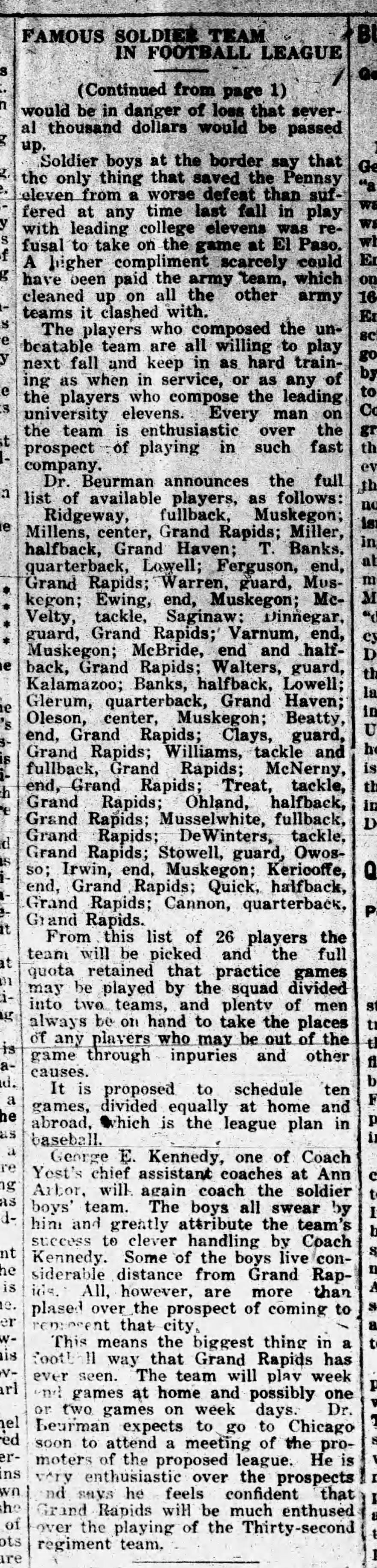
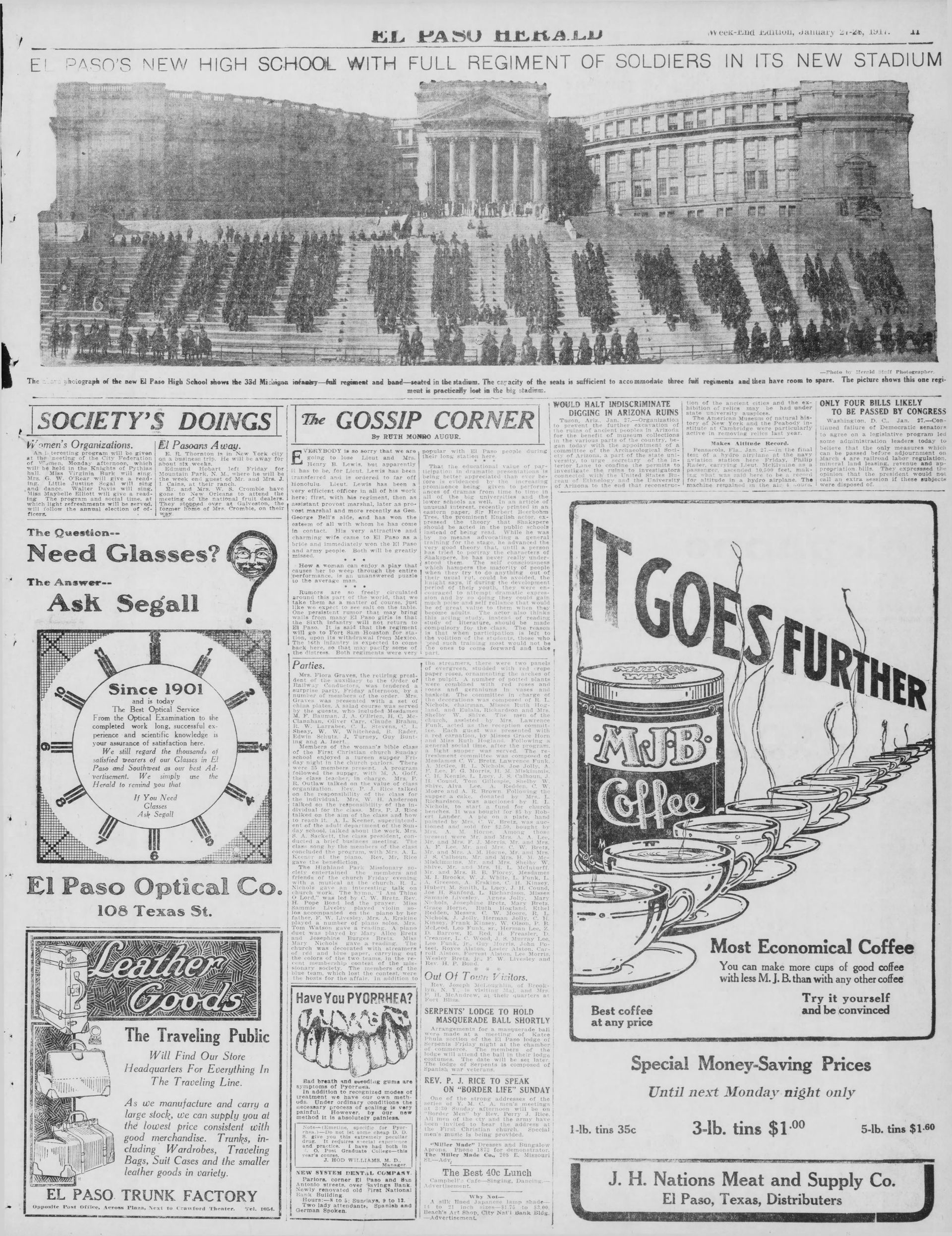
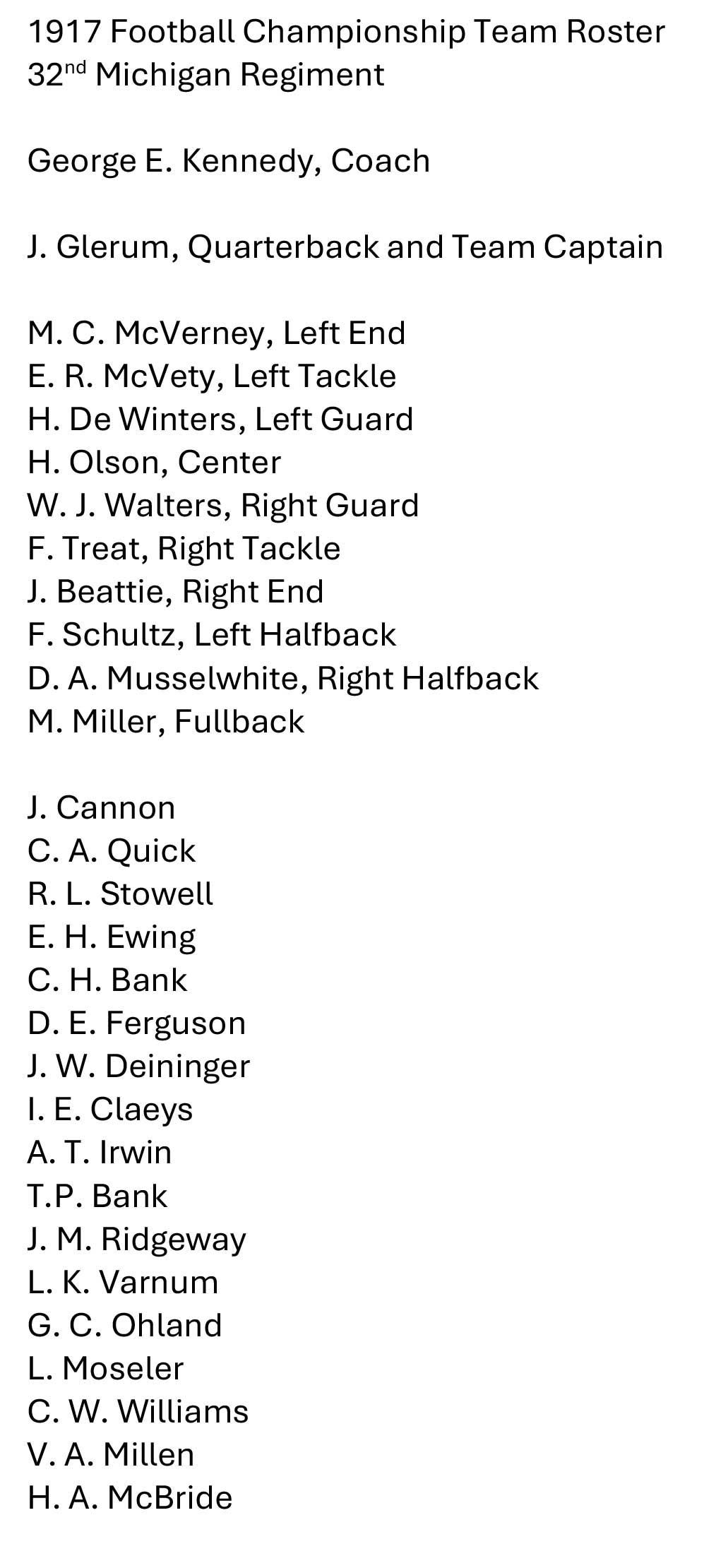
By July 1, the 32nd Regiment was mustered into federal service, and 18 days later, they arrived in El Paso, Texas, establishing themselves at Camp Cotton, just 300 yards from the border. Their mission primarily involved training exercises and, for a brief time, guarding a 47-mile stretch of the Rio Grande. Despite the work, the soldiers grew restless, expecting a short mission that extended well beyond summer. To channel their energy and morale, the regiment formed a football team. What began as an impromptu game between the Grand Rapids boys and Company G from Muskegon soon turned into something remarkable. The 32nd Regiment organized a team of exceptional players, including seasoned high school and collegiate athletes, under the leadership of Sergeant George E. Kennedy. A former player for Princeton and an assistant to Michigan’s legendary Coach Fielding Yost, Kennedy brought expertise that quickly transformed the team into formidable competitors. By October 26, the local El Paso Herald newspaper was reporting that from the practices observed, it saw some mighty good football material. The reporter went on to say the team was rated as strong and their manager was seeking contests with other teams along the border, because in his words, the Michigan football men are ready for games.
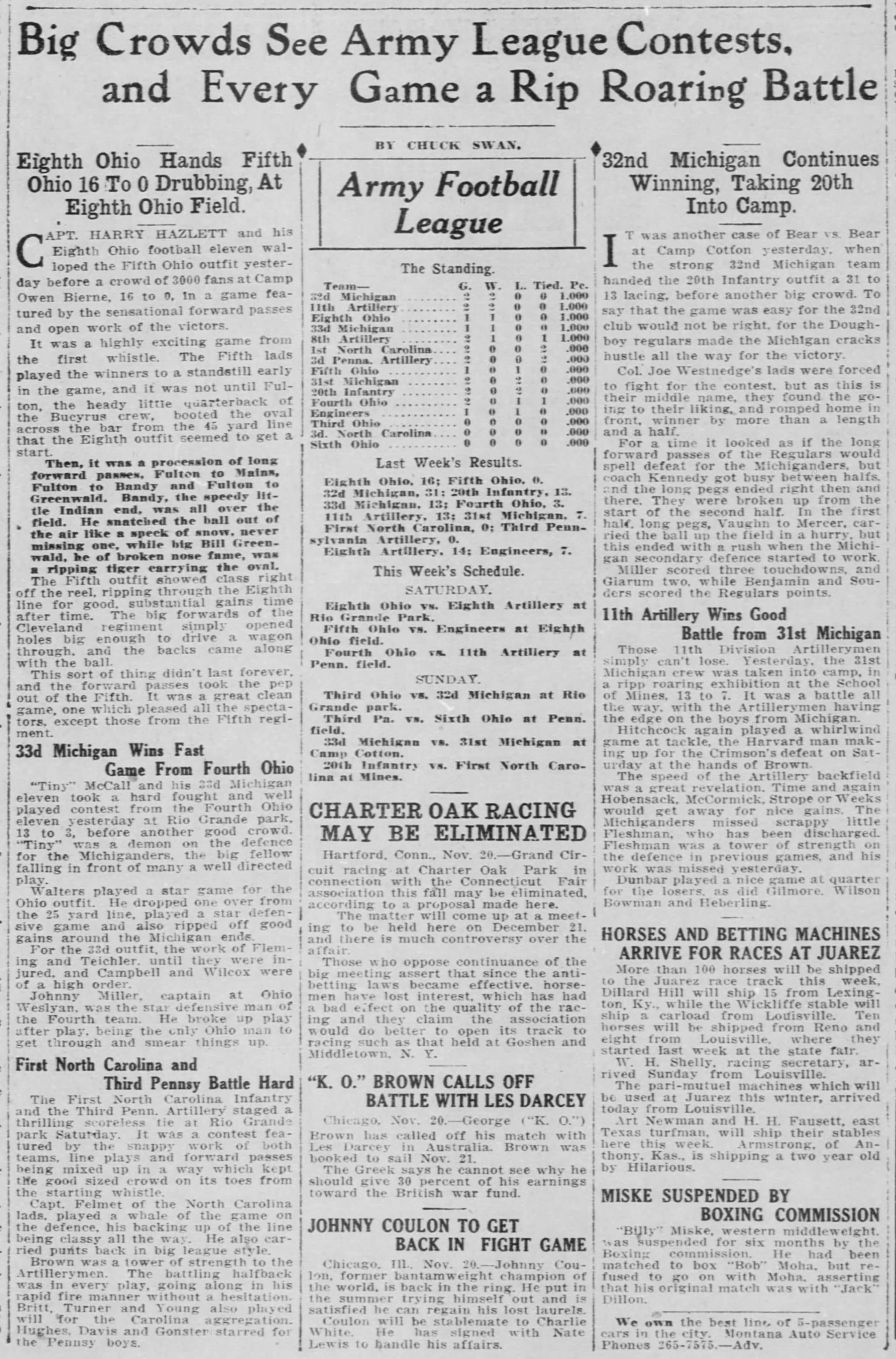
By November, a 12-team league had formed among the military units stationed along the border. The 32nd’s “Wolverines” dominated the field, defeating the 4th Ohio Engineers 47-6, and the 31st Michigan Regiment 14-0. These victories captured public attention, with players like quarterback Jimmy Glerum, halfback Marion Miller, and “Shorty” Quick leading the charge. On November 19th, the 32nd went up against the 20th Regular U.S. Infantry and again came out on top, 31-13. It was this game that caught the public’s attention, with Miller and Glerum combining for five touchdowns. On Thanksgiving Day, the Wolverines went up against another Buckeye team. This time it was the 4th Ohio that came out on the losing end, 13-0. In December, Kennedy’s boys trampled the 3rd Kentucky, 48-7, and six days later, defeated the 11th Provisional Artillery, 13-7. It was deemed “one of the most sensational football games ever witnessed in this neck of the woods,” with a crowd of over 4,000 on hand for the game. On December 18th, one day after strong winds postponed the scheduled game, the 32nd defeated the 33rd Michigan, 27-7, giving Kennedy’s team the Michigan Brigade title, guaranteeing they would play in the championship game.
On New Year’s Day 1917, the Wolverines faced their greatest challenge: the undefeated 8th U.S. Army Regular Artillery team in the championship game at El Paso High School’s newly built stadium. It was a clash of titans, pitting Kennedy’s Wolverines against West Point star Player-Coach Swing. The game, hailed as the “best football game of the local season,” drew a large crowd, including General George Bell, Jr., and his staff. Now, I would love to take you through the play-by-play of that eventful game, but time prohibits me from doing so tonight. Needless to say, those Wolverines delivered a stunning performance, claiming victory with a final score of 41-26. The El Paso Times proclaimed, “Hail to the champions!” General Bell presented the trophy and the celebration that followed included a parade through El Paso to Camp Cotton, and a bonfire, with Michigan soldiers reveling in their triumph.
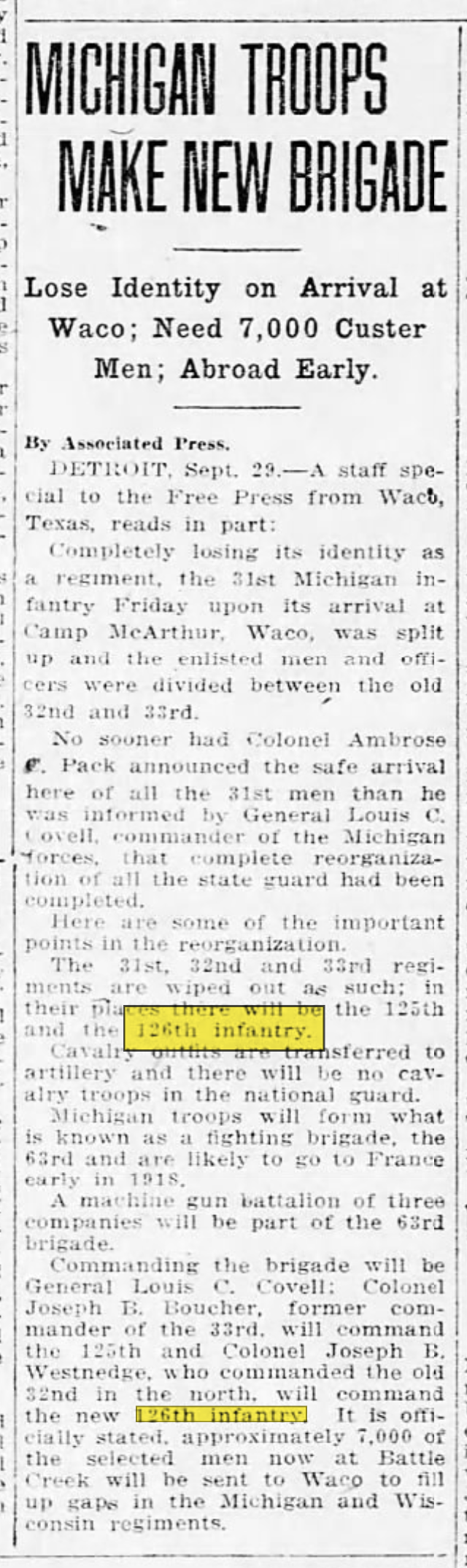
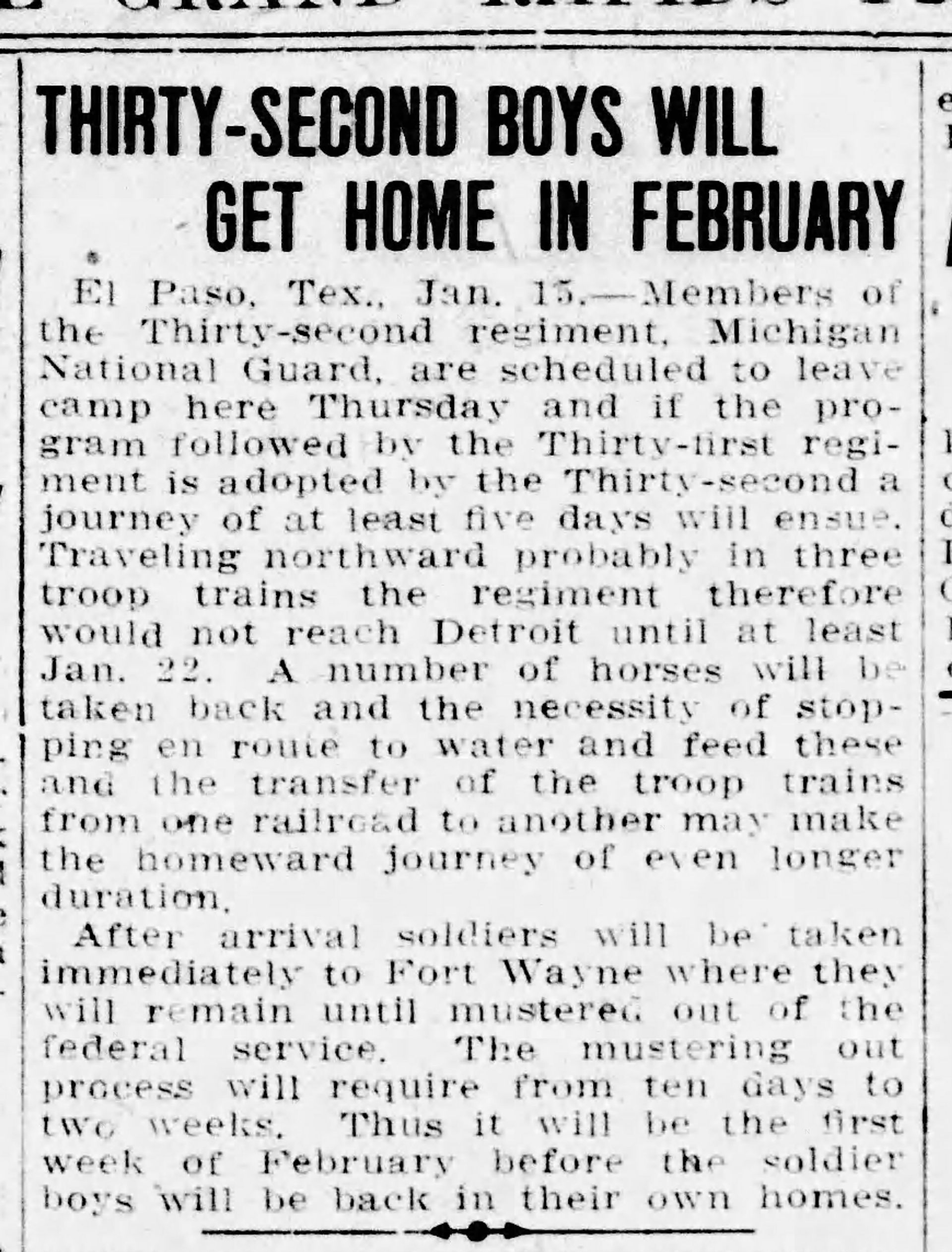
On January 12, 1917, the 32nd Regiment returned to the stadium for a commemorative photograph. One month later, they were mustered out of federal service, only to soon return to action as part of the 126th Infantry Regiment, 32nd “Red Arrow” Division, heading to Europe to face the German forces. Their fierce spirit, honed on that El Paso football field, would help carry them through the challenges of war.
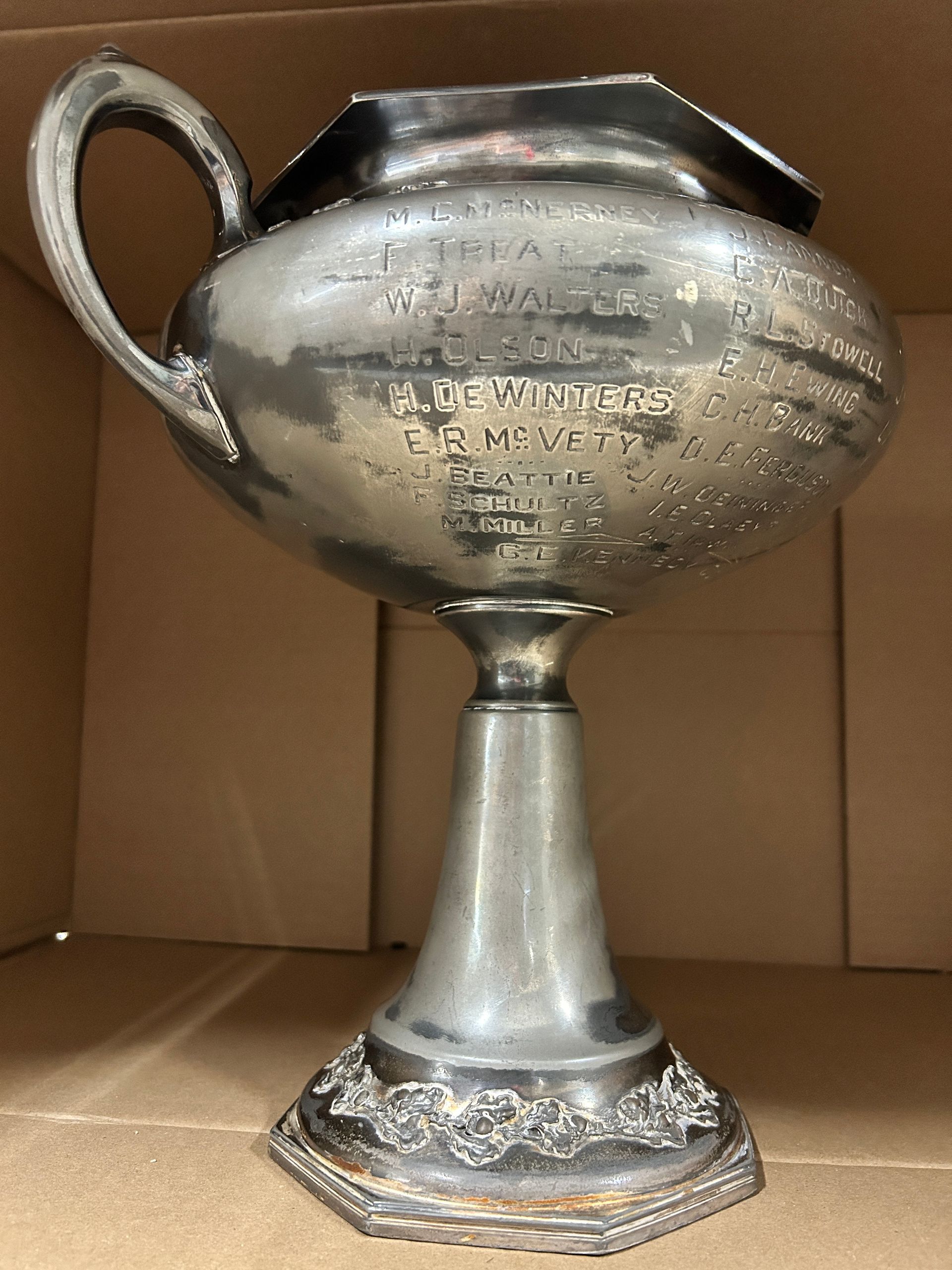
And now, let me share a tangible piece of that history. [SECURE TROPHY FROM CARRYING CASE AND HOLD UP FOR AUDIENCE] This trophy, inscribed with the names of the team and Coach Kennedy, has been a symbol of that proud victory for over a century. Tonight, we honor their legacy.
HAIL TO THE ARMY CHAMPIONS!
Thank you and enjoy the rest of your evening.